
Question 1
Refer to the exhibit.
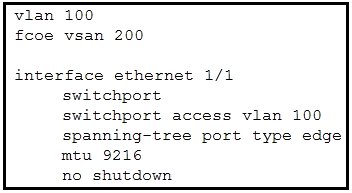
An attempt to bind the Ethernet interface to vFC fails. Which action resolves the issue?
Correct Answer:
C. Configure the interface as a trunk port.
Refer to the exhibit.
An attempt to bind the Ethernet interface to vFC fails. Which action resolves the issue?
Refer to the exhibit.
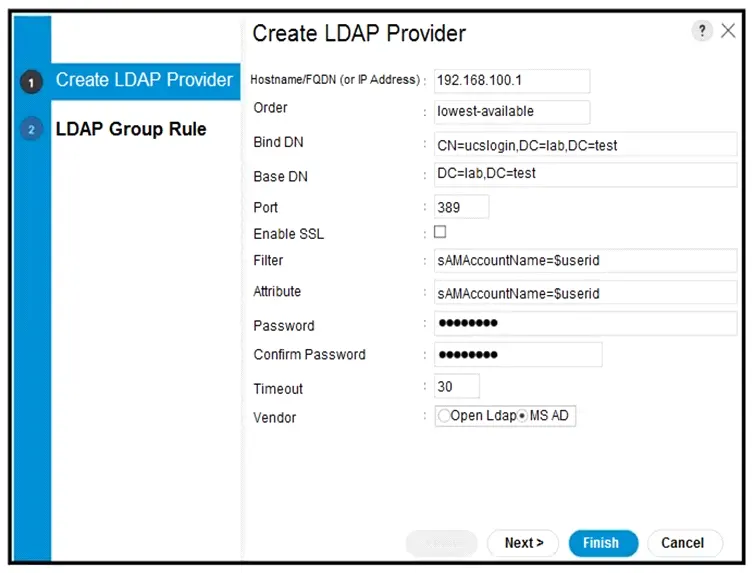
Refer to the exhibit. A network engineer configures an authentication domain through an LDAP provider on the Cisco UCS Manager for users from different companies to log into their respective organizations created in the UCS Manager. The engineer tests the configuration and notices that any user has login access to any organization in the UCS Manager. Which action should be taken to resolve the issue?
When any user can log into any organization in Cisco UCS Manager through LDAP, the issue is that user-to-organization mapping is not properly configured. Resolutions include:
The primary action is to configure LDAP groups or individual users with role-based access that restricts them to specific organizations, preventing cross-organization access.
A network engineer must connect a Cisco UCS Fabric Interconnect cluster to the Cisco ACI. VMware ESXi hypervisors have been installed on Cisco UCS blades and a VMware VMM domain has been configured. However, virtual machines fail to reach their default gateway in the Cisco ACI Fabric. The engineer investigates the issue and notices that the VMware Distributed Switch (VDS) teaming policy is set to "Route based on IP hash". Which action resolves the issue?
Refer to the exhibit.
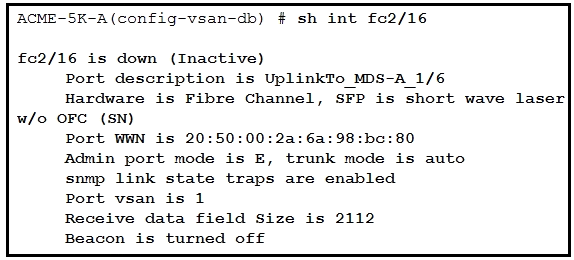
The connection between a Cisco Nexus 5548UP switch and a Cisco MDS switch fails to initialize. What is the cause of the issue?
Refer to the exhibit.
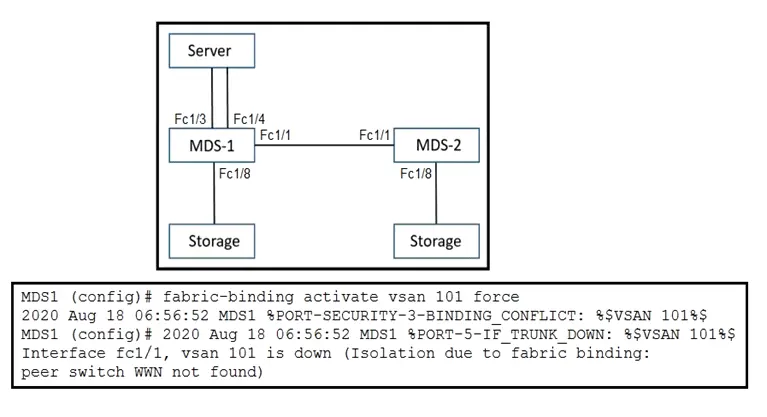
Refer to the exhibits. An engineer is implementing the SAN based on the Cisco MDS 9000 Series Switches. When operating the environment, the engineer encounters the error shown. Which action resolves the issue?
Refer to the exhibit.
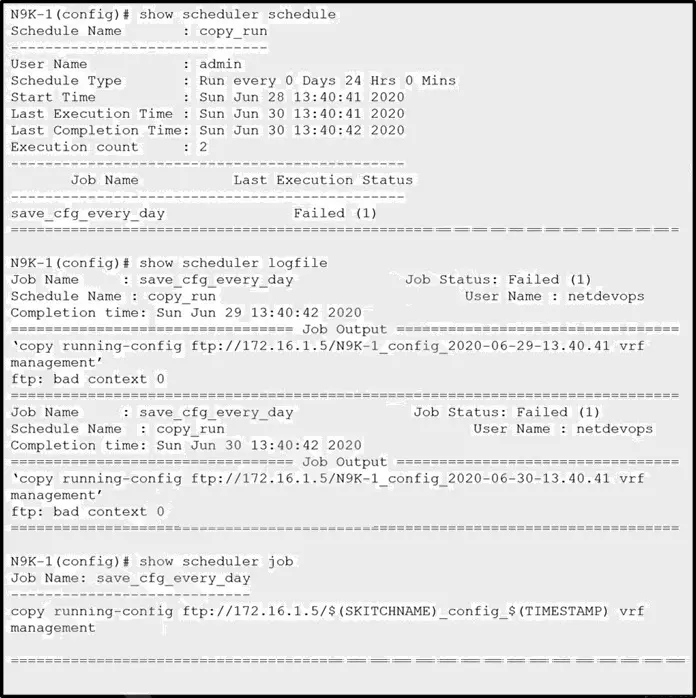
The scheduler was configured to save the running-config automatically daily. However, the scheduler is returning the error presented. Which action resolves the issue?
When the scheduler fails to automatically save the running-config with an error, the issue is typically that the destination path is either invalid, inaccessible, or does not have proper permissions. The resolution involves: (1) Verifying that the destination directory exists and is writable by the system, (2) Ensuring the path uses valid syntax for the device's filesystem (e.g., bootflash:, disk0a:, etc.), (3) Checking that there is sufficient disk space available, (4) Confirming that the scheduler syntax is correct and uses proper scheduling format, and (5) If using a remote destination (FTP, SFTP, SCP), verifying that the remote server credentials are correct and the server is reachable from the device.
The Cisco Nexus switch is connected to a peer switch that is not running Cisco NX-OS. The switches are connected using port channel and are experiencing packet loss. Which action should be performed on the Cisco Nexus switch ports to resolve this issue?
When a Cisco Nexus switch is connected to a non-Cisco peer over port channel with packet loss, the issue is typically a port channel protocol mismatch:
LACP is the industry-standard protocol for dynamic link aggregation and is supported by all major vendors.
Refer to the exhibit.
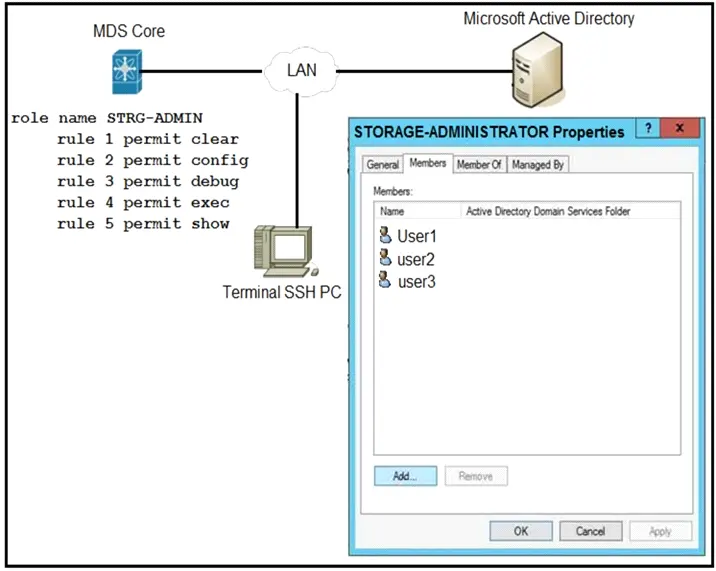
An engineer is troubleshooting why user1, user2, and user3 from group STORAGE- ADMINISTRATOR in Microsoft Active Directory cannot log in to the Cisco MDS SSH CLI. Which action resolves the issue?
Refer to the exhibit.
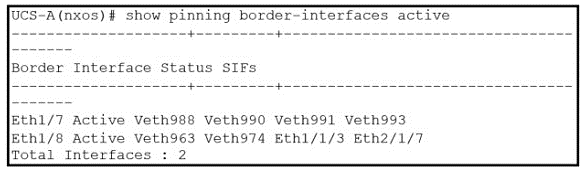
A network engineer traces the packet flow from the Veth991 of a blade server toward the core switch. The switch reports performance issues. What is the role of the interface Eth1/7?
E1/7 is border interface, which is used as uplink. All other veth interfaces are SIF, which stands for Server Interface.
Refer to the exhibit.
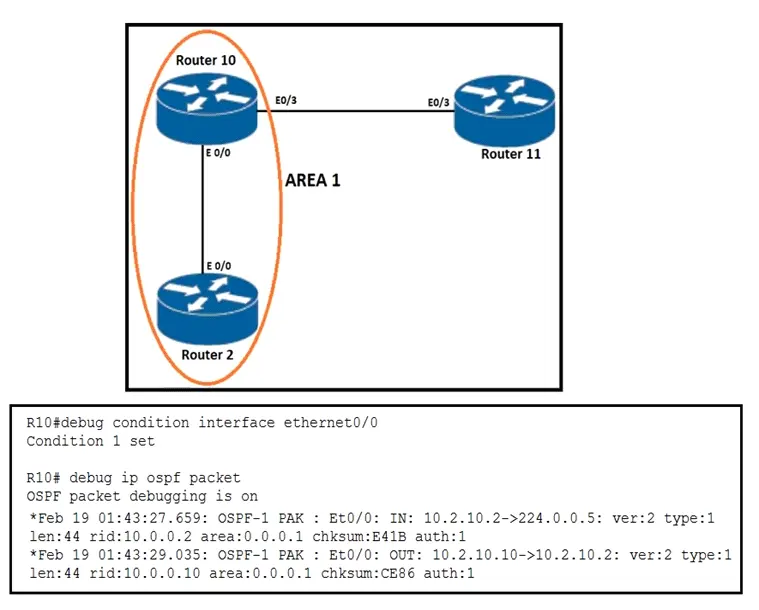
Refer to the exhibit. An engineer troubleshoots an OSPF neighborship problem between Router R2 and Router R10. Which action resolves the problem?
OSPF neighborship failures between two routers typically stem from configuration mismatches. Common issues and resolutions include:
The resolution requires comparing the OSPF configuration on both routers (R2 and R10) and identifying which parameter is mismatched, then synchronizing the configuration between the two sides.
Refer to the exhibit.
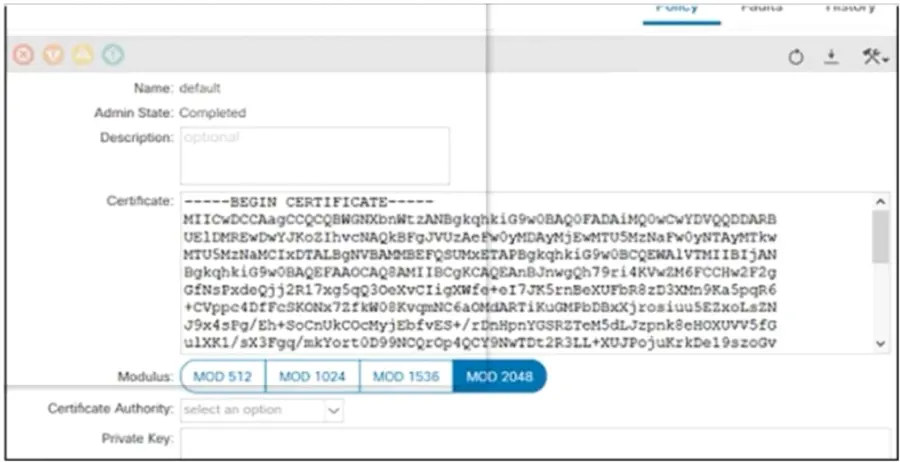
Refer to the exhibit.
A certificate is implemented on the security configuration on the Cisco ACI controller. A customer receives a "Connection Not Secure" error in a browser every time the customer logs in to the Cisco APIC GUI. Which action resolves the issue?
An engineer is implementing a storage VDC, but fails. Which two prerequisites must be in place before a storage VDC is implemented? (Choose two.)
Refer to the exhibit.

Refer to the exhibit. During a maintenance window of the Nexus switch pair, one of the Cisco Nexus chassis was brought offline for maintenance. The primary Cisco Nexus switch was stable during the maintenance window. After finishing the
tasks on the chassis, the administrator wanted to bring the second switch online. The administrator checked the status of the disconnected switch that was removed from the vPC during the maintenance. The engineer must connect the peer chassis seamlessly with the primary vPC peer without experiencing traffic interruption. Which action accomplishes this goal?
Refer to the exhibit.
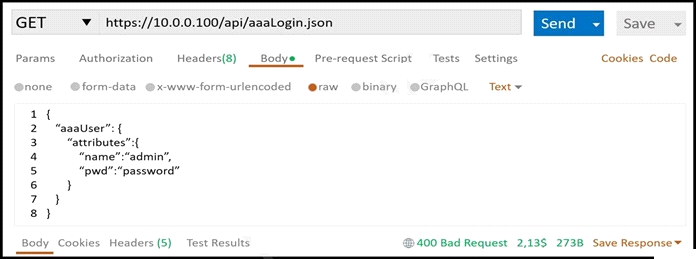
A Postman call to a Cisco APIC fails. The access credentials were confirmed to be configured as expected. Which action resolves the issue?
When a Postman call to a Cisco APIC fails despite correct credentials, the issue is commonly related to SSL certificate validation or authentication token expiration. The resolution involves: (1) Disabling SSL certificate verification in Postman if working in a test environment, (2) Ensuring the APIC URL is correct and uses the proper protocol (https), (3) Verifying that the credentials are in the correct format in the authentication header or body, (4) Checking that the session cookie or authentication token has not expired and requesting a new one if necessary, and (5) Confirming that the user account has the appropriate role-based access control (RBAC) permissions to execute the API operation being requested.