Question 1
Refer to the Exhibit:
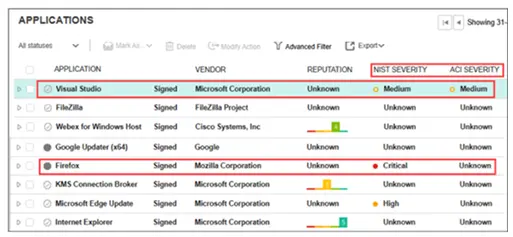
A FortiEDR analyst is prioritizing response efforts. One application has a vulnerability score of Critical but an Unknown ACI rating, while another has a Medium vulnerability score with active ACI evidence of adversary targeting. Which application must be addressed first? (Choose one answer)
The correct answer is D.
The FortiEDR 7.0.0 Administration Guide explains that FortiEDR displays two severity ratings for applications: NIST Severity and ACI Severity. NIST Severity is based on FortiEDR's vulnerability scoring system using the NIST Cybersecurity Framework. ACI Severity, however, is Adversary Centric Intelligence provided by FortiRecon and FortiGuard Threat Analysts, covering dark web, open-source, and technical threat intelligence, including threat actor insights. This helps administrators proactively assess risk, respond faster to incidents, understand attackers, and protect assets.
The guide also states that FortiEDR helps analysts prioritize alerts and incidents using risk factors such as severity of vulnerabilities, relevance of threat intelligence feeds, and severity of affected endpoints, so effort is focused on the most significant organizational risks.
Therefore, the application with Medium NIST severity but active ACI evidence of adversary targeting should be prioritized over an application with Critical NIST severity but Unknown ACI rating, because active adversary-centric intelligence indicates current attacker interest or exploitation relevance. In plain terms: a theoretical critical vulnerability matters, but an actively targeted vulnerability is the fire you put out first.
Option B is tempting but incomplete because it relies only on NIST/CVSS severity. FortiEDR's ACI rating exists specifically to add adversary context to prioritization. Option A is wrong because FortiEDR does not treat all vulnerable applications equally. Option C is wrong because asset criticality can matter, but the guide does not say prioritization depends only on asset criticality.