
Question 1
What are three functions that can be performed by the Data Creator role?
Correct Answer:
A. Manage all hierarchies; B. Create hierarchies; E. Manage standard queries
What are three functions that can be performed by the Data Creator role?
Identify the three true statements about the Initial Data Load process when you first implement DRM.
Identify the three true statements about using the "Asc" property types.
Identify three ways to narrow the scope of the first phase of the DRM implementation.
Choose three validations that are often implemented for downstream systems.
How can downstream systems receive exported data from DRM?
1. Database query
2. Export
3. Export Book
4. API
5. DRM Migration utility
Identify the three true statements about Workflow in DRM.
Per the example:
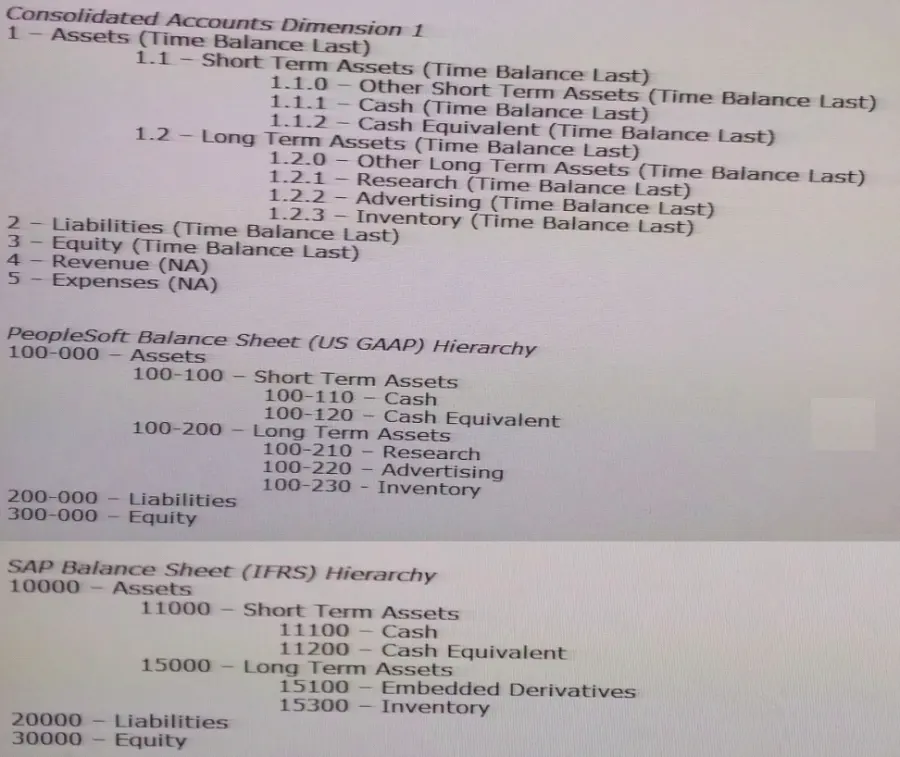
Your organization has two ERPs: PeopleSoft (PS) and SAP. Each ERP has its own chart of accounts. Each chart of accounts is mapped to a consolidated chart of accounts. The Finance department maintains the consolidated account hierarchy.
Identify the steps in the correct order to manage the mapping of the local chart of accounts in the consolidated chart of accounts structure using DRM hierarchies.
1. Build the consolidated chart of accounts hierarchy.
2. Build the PeopleSoft and SAP chart of accounts hierarchies.
3. Create a property category called CoA Map with two property definitions: PS CoA Mapping and SAP CoA Mapping.
4. Create an alternate Market hierarchy with limb nodes "large", "Medium", and "Small". Insert cities as leaf nodes under the appropriate Market Size nodes.
5. Use the Blend function to merge the PeopleSoft and sap chart of accounts to the correct consolidated account node In the consolidated hierarchy.
6. Drag and drop the PeopleSoft and SAP chart of accounts to the correct consolidated account in the consolidated hierarchy.
Identify the two true statements about node access groups.
Per the following example:
All Products
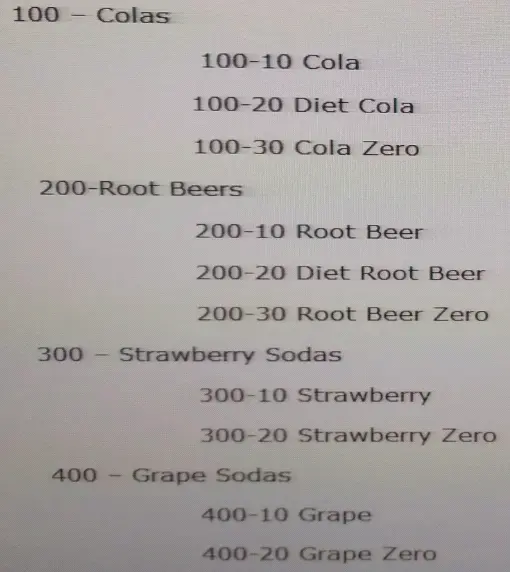
The product team has decided to group 300 and 400 product categories into a single "Fruity" product category. Which three statements are true about performing this change within a single hierarchy?