Limited-Time Offer: Enjoy 50% Savings! Ends in 00h 00m 00s Coupon code: 50OFF
Skip to content

Free Salesforce Certified MuleSoft Developer Salesforce-MuleSoft-Developer-I Exam Questions

Page: 1 / 16 Total 235 questions

Want more questions? Get Premium Access.

Question 1

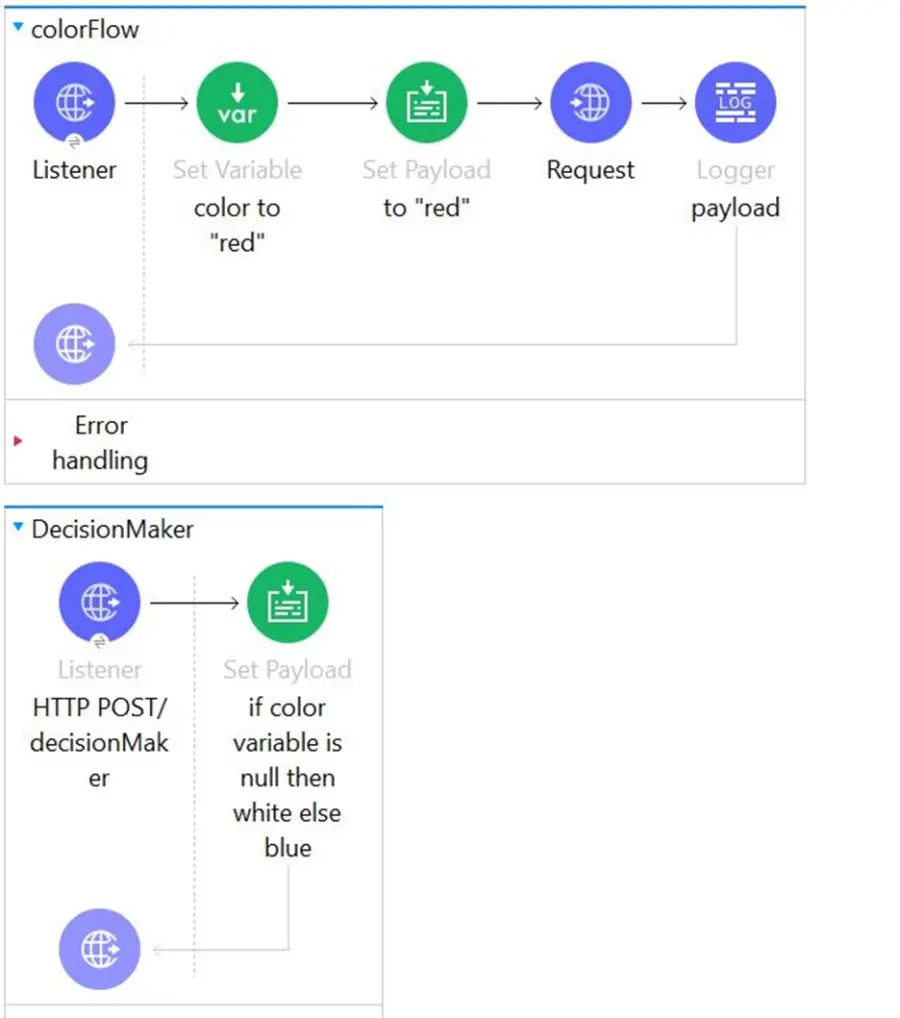
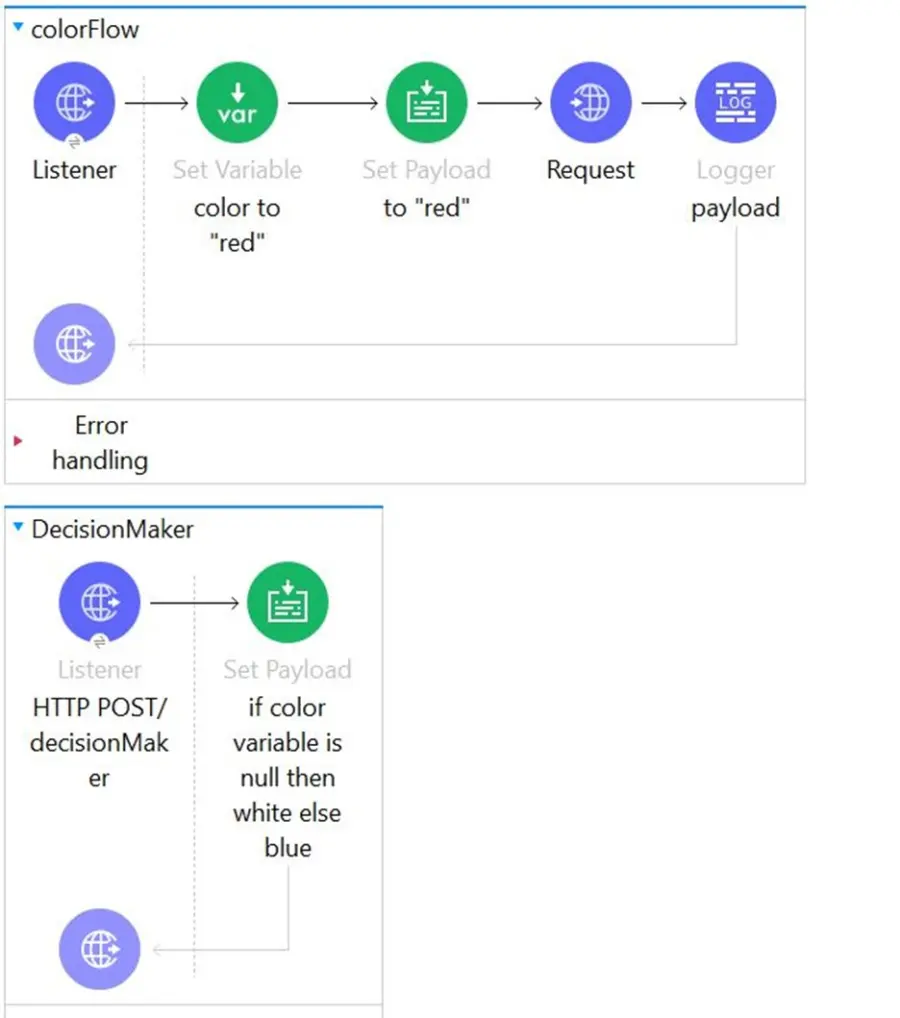
Refer to the exhibits. In the color flow , both the variable named color and payload are set to "red".

An HTTP POST request is then sent to the decideColor flow's HTTP Listener.

What is the payload value at the Logger component after the HTTP request completes?

Correct Answer: C. blue

Question 2

What is the output of Dataweave Map operator?

Correct Answer: D. Array
Explanation:

Returns an array that is the result of applying a transformation function (lambda) to each of the elements.

MuleSoft Doc Ref : https://docs.mulesoft.com/mule-runtime/4.3/dataweave-cookbook-map

The map operator is a function in Dataweave which iterates over the items in an array and outputs them into a new array. It basically accepts input as a list of items in an array and manipulates the items in the array in order to form a new array as an output.

I have created below chart for your easier understanding:


Question 3

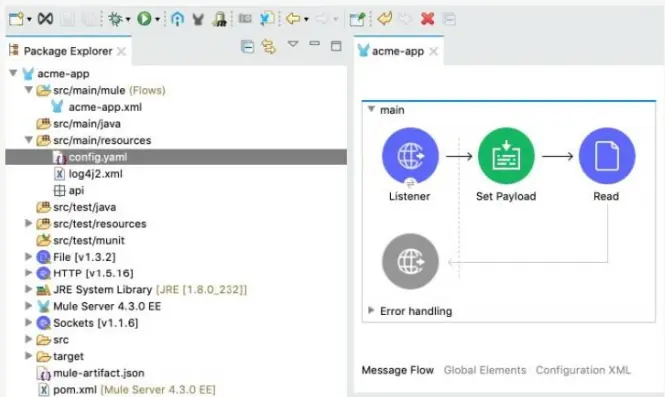
Refer to the exhibit.

The Mule application's connectors are configured with property placeholders whose values are set in the config.yaml file

What must be added to the Mule application to link the config.yaml file's values with the property placeholders?

Correct Answer: A. A configuration-properties element in the acme-app xml file

Question 4

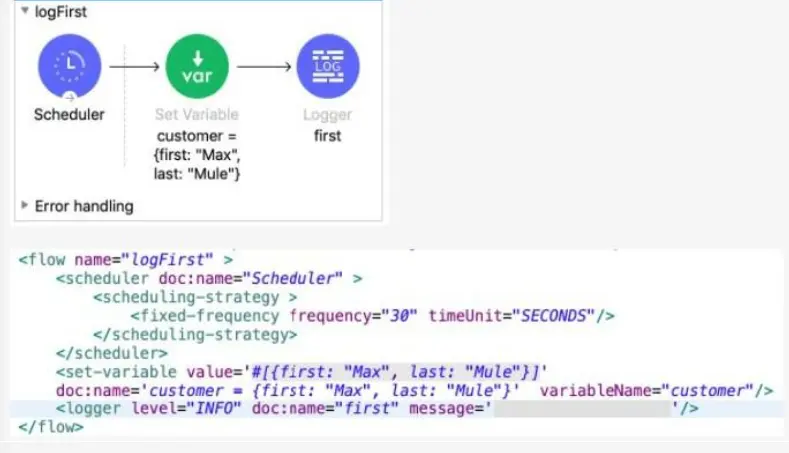
Refer to the exhibits.

The Set Variable transformer is set with value #[ [ first "Max" last "Mule"} ].

What is a valid DataWeave expression to set as the message attribute of the Logger to access the value "Max" from the Mule event?

Correct Answer: D. vars 'customer' 'first'

Question 5

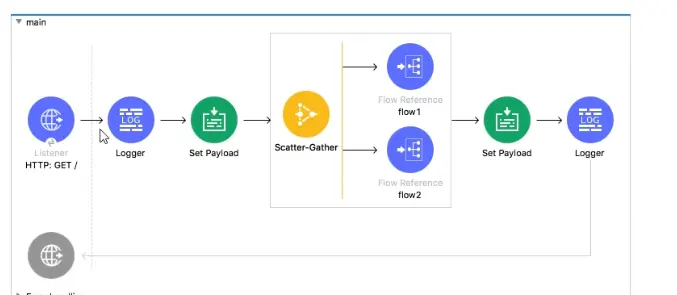
Refer to the exhibit.

In the execution of the Scatter_Gather, the flow1 route completes after 10 seconds and the flow2 route completes after 20 seconds.

How many seconds does it take for the Scatter_Gather to complete?

Correct Answer: C. 20

Question 6

An SLA based policy has been enabled in API Manager. What is the next step to configure the API proxy to enforce the new SLA policy?

Correct Answer: D. Add required headers to the RAML specification and redeploy the new API proxy
Explanation:

Correct answer is Add required headers to RAML specification and redeploy new API proxy

MuleSoft Doc Ref : https://docs.mulesoft.com/api-manager/2.x/tutorial-manage-an-api

Steps are as below :

Add the Required RAML Snippet

SLA-based rate limiting requires adding a RAML or OAS snippet to your API. This procedure demonstrates adding a RAML snippet.

Specify the client ID and secret as query parameters.

Add a section called traits: at the RAML root level to define query parameters:

traits:

- client-id-required:

queryParameters:

client_id:

type: string

client_secret:

type: string

Add the client-id-required trait to every method that requires these query parameters:

/users:

get:

is: [client-id-required]

description: Gets a list of JSONPlaceholder users.

Step 2 : Add the SLA Tier in API Manager

Step 3 : Apply the policy and redeploy


Question 7

What MuleSoft API-led connectivity layer is intended to expose part of a backend database without business logic?

Correct Answer: D. System layer
Explanation:

Correct answer is System layer

System APIs provide a means for insulating the data consumers from the complexity or changes to the underlying backend systems.

MuleSoft recommends three-layered approach to API-led connectivity, highlighting the three layers:

* System APIs

* Process APIs

* Experience APIs

System APIs are the core systems of record underlying core systems of record (e.g. ERPs, key customer and billing systems, databases, etc.). Process APIs allow you to define a common process which the organization can share, and these APIs perform specific functions, provide access to non-central data, and may be built by either Central IT or Line of Business IT. And finally, the Experience APIs are the means by which data can be reconfigured so that it is most easily consumed by its intended audience, all from a common data source.

The three-layered structure allows for a seamless flow of data from systems of record to new experiences, and allows for reusability of assets rather than point to point connections. This approach provides a distributed and tailored approach to architecture, greater flexibility through loose coupling, and deeper operational visibility into what is being built.


Question 8

A flow has a JMS Publish consume operation followed by a JMS Publish operation. Both of these operations have the default configurations. Which operation is asynchronous and which one is synchronous?

Correct Answer: A. Publish consume: Synchronous. Publish: Asynchronous.
Explanation:

Publish consume: Synchronous. Publish: Asynchronous.


Question 9

Which Mule component provides a real-time, graphical representation of the APIs and mule applications that are running and discoverable?

Correct Answer: C. Anypoint Visualizer
Explanation:

Correct answer is Anypoint Visualizer

MuleSoft Doc Ref : https://docs.mulesoft.com/visualizer/

Anypoint Visualizer provides a real-time, graphical representation of the APIs, and Mule applications that are running and discoverable. It also displays third-party systems that are invoked by a Mule API, proxy, or application within your application network. The data displayed in the graph is dynamically updated and does not require prior configuration. Additionally, the data displayed is secure, as only users with the proper permissions can view the application network graph.


Question 10

How are query parameters dynamically passed to an outbound REST request using an HTTP Request operation?

Correct Answer: A. As query parameters in the HTTP Request operation
Explanation:

In General > Request > Query Parameters, click the plus icon (+) to add a parameter to a request. Type a name and value for the parameter or use a DataWeave expression to define the name and value.


Question 11

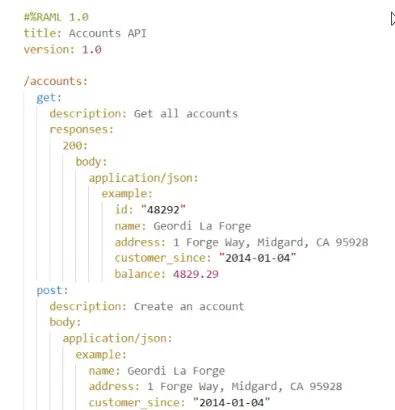
Refer to the exhibit.

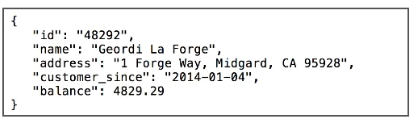
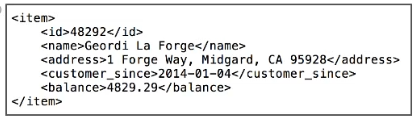
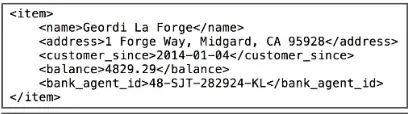
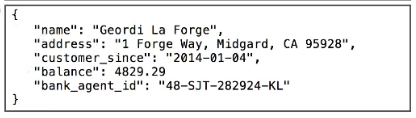
What data is expected by the POST /accounts endpoint?

A)

B)

C)

D)

Correct Answer: D. Option D

Question 12

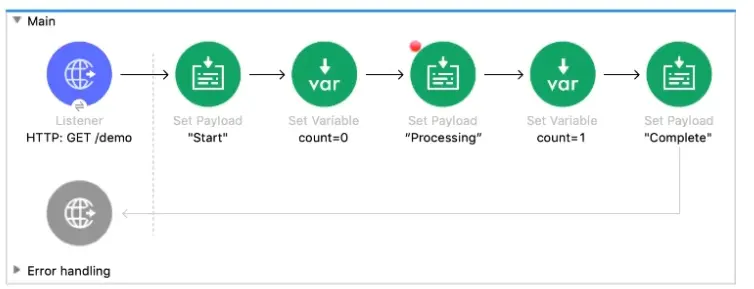
Refer to the exhibit.

The Mule application Is debugged in Any point Studio and stops at the breakpoint What is the value of the payload displayed In the debugger at this breakpoint?

Correct Answer: C. 'Start'

Question 13

What is not the function of API Gateway ?

Correct Answer: D. Specify throttling , security and other policies
Explanation:

Correct answer is Specify throttling , security and other policies

MuleSoft Doc Ref : https://docs.mulesoft.com/api-manager/2.x/api-gateway-capabilities-mule4

API Gateway is responsible for below functions.

1) Determine which traffic is authorized

2) Meter the traffic

3) Logs transaction

4) Apply throttling and other policies (Not specifying. These are specified in API Manager)


Question 14

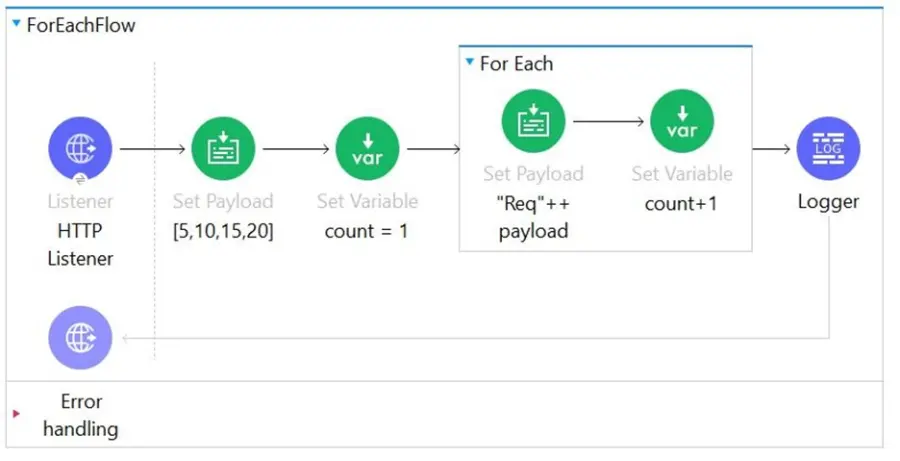
Refer to the exhibits.

What payload and variable are logged at the end of the main flow?

Correct Answer: B. [[5, 10, 15, 20], 5]
Explanation:

Correct answer is [[5, 10, 15, 20], 5]

Key thing to note here is that any changes made to payload in for each loop are not available outside for each scope where as variable value updated in for each loop is visible out side for each loop too.

In this example , sequence can be described as follows

1) Payload is set to the value [5, 10, 15, 20]

2) Variable is set to the value of 1

3) For each loop is executed four times and in each loop payload value is updated to append 'Req' and variable is count is increased by 1

4) Once control comes out of for each , payload changes made within for each are not visible. Hence payload at this point of time is equal to payload available before entering for each loop which was [5, 10, 15, 20]. Similarly variable value updated in for each loop is also available outside hence variable value is 5 as it was updated in loop.

5) Hence correct answer is [[5, 10, 15, 20], 5]

For Each Scope

The For Each scope splits a payload into elements and processes them one by one through the components that you place in the scope. It is similar to afor-each/forloop code block in most programming languages and can process any collection, including lists and arrays. The collection can be any supported content type, such asapplication/json,application/java, orapplication/xml.

General considerations about the For Each scope:

By default, For Each tries to split the payload. If the payload is a simple Java collection, the For Each scope can split it without any configuration. The payload inside the For Each scope is each of the split elements. Attributes within the original message are ignored because they are related to the entire message.

For Each does not modify the current payload. The output payload is the same as the input.

For non-Java collections, such as XML or JSON, use a DataWeave expression to split dat

a. Use theCollectionfield for this purpose.


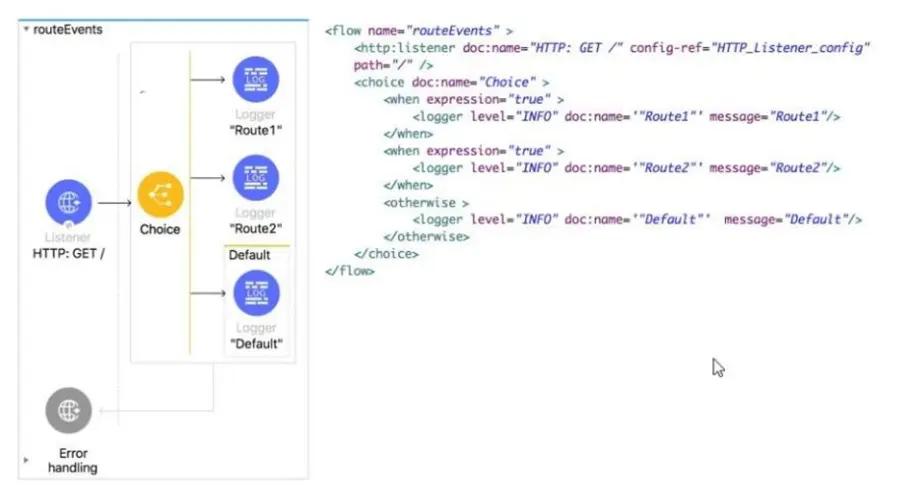
Question 15

Refer to the exhibits.

All three of the conditions for the Choice router are true. What messages are written in the application log?

Correct Answer: A. Route1
Explanation:

Only one of the routes in the Choice router executes, meaning that the first expression that evaluates to true triggers that route1 execution and the others are not checked. If none of the expressions are true, then the default route executes. Hence only Route1 will be executed as it is the first expression. hence output of logger is Route1.

MuleSoft Doc Ref : https://docs.mulesoft.com/mule-runtime/4.3/choice-router-concept

The Choice router dynamically routes messages through a flow according to a set of DataWeave expressions that evaluate message content. Each expression is associated with a different routing option. The effect is to add conditional processing to a flow, similar to an if/then/else code block in most programming languages.

Only one of the routes in the Choice router executes, meaning that the first expression that evaluates to true triggers that route's execution and the others are not checked. If none of the expressions are true, then the default route executes.