
Limited-Time Offer: Enjoy 50% Savings! Ends in 00h 00m 00s Coupon code: 50OFF
Skip to content

Free SAVE International Certified Value Specialist CVS Exam Questions

Page: 1 / 15 Total 143 questions

Want more questions? Get Premium Access.

Question 1

Function analysis is used to

Choose 2 answers.

Correct Answer: A. provide a new understanding of the project.; B. identify improvements.
Explanation:

The correct answers are A and B. Function Analysis is used to give the VM team a clearer and often new understanding of the project by describing the project in terms of what it must do, rather than what it currently is. The SAVE International Study Guide identifies Function Analysis as the foundation of Value Methodology and states that functions are identified to describe the work being performed within the study scope. It also explains that functions are expressed through active verb and measurable noun pairings, which supports clear thinking and a shared understanding of functional requirements. ()

Function Analysis is also used to identify improvements. After defining and naming project functions, the team reviews them to determine which functions may be inefficient, over-costly, or suitable for improvement. The Study Guide further explains that this process allows the team to identify where value improvement opportunities exist in the project. () Creating a collaborative environment is more broadly related to facilitation and team dynamics, not the primary purpose of function analysis. Assisting only individuals with a technical background is incorrect because VM is multidisciplinary.

Reference/topics: Function Analysis Phase; Function Definition; Functional Requirements; Value Improvement Opportunities; FAST/Function Modeling.
Question 2

Which of the following considerations should be included in the Implementation Plan for each of the accepted VM proposals?

Choose 3 answers.

Correct Answer: A. Implementation costs; B. Responsibility; C. Schedule
Explanation:

The correct answers are A, B, and C. An implementation plan for accepted VM proposals must translate approved recommendations into executable action. Therefore, it must identify the implementation costs, the responsible parties, and the schedule for completing the required activities. The SAVE Value Methodology Standard states that during proposal development, the team prepares implementation requirements, including estimated initial costs, life-cycle costs, and implementation costs, while accounting for risk and uncertainty. It also requires technical data to identify schedule impact. (UW Courses)

The same Standard further specifies that the implementation plan should include the proposed schedule of all implementation activities, team assignments, and management requirements. This directly supports responsibility and schedule as required plan elements. (UW Courses) In the Implementation/Post-Study activity, assignments may be made to VM team members or to other individuals designated by management, so the key requirement is not generic ''VM Team involvement'' but clear accountability. (UW Courses) ''New proposals'' are not part of the implementation plan for already accepted proposals; they would belong to a new study cycle or further development.

Reference/topics: Implementation Phase; Development Phase; Implementation Plan; Accepted VM Proposals; Responsibility Assignment; Schedule and Cost Requirements.


Question 3

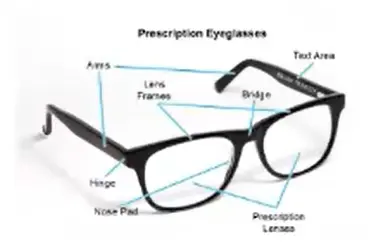
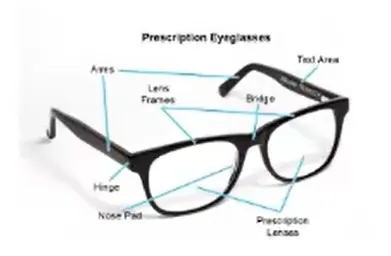
Which function of prescription eyeglasses is located in the ''When'' direction?

Correct Answer: B. Maintain position
Explanation:

The correct answer is B. Maintain position. In FAST diagramming, the horizontal logic path normally answers How and Why. The vertical ''When'' direction is used for supporting or secondary functions that occur in relation to a function on the critical function logic path. SAVE's VM Glossary defines a FAST diagram as a graphical representation of dependent function relationships and specifically identifies the labeled How, Why, and When arrows as FAST components. It also explains that vertical lines connect secondary functions to required secondary functions through their ''When'' relationships. ()

For prescription eyeglasses, Modify vision is the core/basic function because the lenses correct or adjust the user's vision. Facilitate sight is a higher-order purpose explaining why the basic function exists. Maintain position is a supporting function because the frame, bridge, temples, and nose pads keep the lenses properly located in front of the eyes while the eyeglasses modify vision. This function happens concurrently with the basic function, making it appropriate in the When direction. Fold eyeglasses is only a convenience/storage function, not the functional support required during vision correction.

Reference/topics: Function Analysis Phase; FAST Diagramming; When Relationship; Secondary Function; Prescription Eyeglasses Function Model.


Question 4

The decision-makers agreed to implement a VM proposal requiring an organizational change. What should be done to improve success?

Choose 2 answers.

Correct Answer: A. Encourage participation by those affected by the change; D. Appoint an oversight committee
Explanation:

The correct answers are A. Encourage participation by those affected by the change and D. Appoint an oversight committee. In the Implementation Phase, the approved VM proposal must be converted from an accepted recommendation into an actual organizational action. When the proposal requires organizational change, technical approval alone is not enough; successful implementation depends heavily on acceptance, ownership, coordination, and follow-through.

Encouraging participation by those affected by the change is essential because employees, managers, operators, and process owners who must live with the change often understand the practical barriers, workflow impacts, training needs, and resistance points. Their involvement improves buy-in and reduces implementation failure.

Appointing an oversight committee is also appropriate because organizational change normally crosses departments, responsibilities, and authority levels. Oversight provides governance, monitors progress, resolves conflicts, confirms accountability, and ensures the approved VM proposal remains aligned with the intended value improvement.

Option B is less suitable because an implementation plan should be clear and controlled, but not so rigid that it prevents adjustment during organizational transition. Option C is not required; a consultant may help in special cases, but it is not a primary VM implementation requirement.

Reference/topics: Implementation Phase; Change Adoption; Stakeholder Participation; Implementation Governance; VM Proposal Follow-Through.


Question 5

A function performance specification:

Choose 3 answers.

Correct Answer: A. accurately identifies requirements specific to functions.; D. communicates customer performance wants and needs.; E. assists in uncovering hidden assumptions.
Explanation:

The correct answers are A, D, and E. A Function Performance Specification is used to define performance requirements in terms of the functions that must be achieved, not in terms of a predetermined design solution. In VM, value is linked to functions measured by the customer's performance requirements, and the methodology seeks alternate ways to accomplish a function while meeting customer performance expectations. ()

Therefore, it accurately identifies requirements specific to functions. FPS characterizes each function through criteria, expected performance levels, and flexibility, which makes the requirement measurable and traceable. (Value Analysis) It also communicates customer performance wants and needs because it documents what the user or customer expects the solution to accomplish. The FPS approach expresses needs and expected performance without reference to a specific solution, allowing broader innovation while maintaining customer requirements. (Value Analysis)

It also helps uncover hidden assumptions because vague wants must be translated into explicit criteria, levels, and flexibility. Option B is incorrect because FPS does not evaluate or limit VM team options; it defines functional performance expectations. Option C is incorrect because FPS should avoid constraining designers to a specific design.

Reference/topics: Function Analysis Phase; Function Performance Specification; Customer Requirements; Performance Criteria; Functional Requirements.


Question 6

Which of the following are typically documented in the ''accepted'' VM proposal status report?

Choose 3 answers.

Correct Answer: A. Next update; D. Tracking identification number; E. Performance impacts
Explanation:

The correct answers are A. Next update, D. Tracking identification number, and E. Performance impacts. In the Implementation Phase, accepted VM proposals must be tracked so that the organization can confirm whether the approved value improvement is actually being carried into execution. The VM Guide explains that implementation status reports formally document and track the status of VM proposals and are used by VM program managers to follow implementation progress. It specifically identifies a tracking identification number as the code used to track the change within the organization, and it also requires discussion of performance impacts, including any deviation from the VM team's original performance assessment. (pdfcoffee.com)

A next update is also appropriate because implementation status reporting is not a one-time record; it is a continuing control mechanism. The guide identifies ''Next update'' as the date of the next implementation status update. (pdfcoffee.com)

Option C is incorrect because the VM study presentation is an input used earlier to resolve proposals, not a documented element of an accepted proposal status report. Option B is administrative and may appear in some organizations, but the essential accepted-proposal tracking content focuses on traceability, implementation follow-up, and validated impacts.

Reference/topics: Implementation Phase; Implementation Status Reports; Accepted VM Proposals; Tracking Identification Number; Performance Impacts; Next Update.


Question 7

Which of the following situations are MOST appropriate for using a RACI matrix?

Choose 2 answers.

Correct Answer: B. Communication gaps; D. Misunderstood concepts
Explanation:

The correct answers are B and D. A RACI matrix is most appropriate when the VM facilitator needs to clarify involvement, responsibility, accountability, consultation, and communication among participants or stakeholders. In the SAVE International Value Methodology Core Competencies, the RACI matrix is listed under the Information Phase as a method used to transform information, while process flowcharts are listed separately as a different technique. This distinction is important because a RACI matrix does not map process sequence; it clarifies roles and involvement.

A RACI chart defines who is Responsible, Accountable, Consulted, and Informed for project tasks, and it is used to reduce confusion, improve communication pathways, and establish clear ownership. (Atlassian) Therefore, it directly addresses communication gaps and misunderstood concepts related to who should act, decide, advise, or be kept informed.

Option A is incorrect because process-flow issues are better handled with a process flowchart. Option C is incorrect because validated assumptions do not require role clarification; they are already confirmed information.

Reference/topics: Information Phase; RACI Matrix; Methods to Transform Information; VM Facilitation; Stakeholder Communication.


Question 8

On the Function Logic Path, how do prescription eyeglasses correct vision?

Correct Answer: D. Align focus
Explanation:

The correct answer is D. Align focus. In Function Analysis, the team defines what the subject must do, not what its parts are. SAVE's study guidance states that functions are described using two-word active verb/measurable noun pairings, and FAST is used to show how project functions relate to each other. ()

For prescription eyeglasses, the basic function is correct vision. On the Function Logic Path, the ''how'' question asks: How do eyeglasses correct vision? The best functional answer is align focus because prescription lenses bend and direct light so the image focuses correctly for the user. This directly supports the basic function.

The other choices are supporting or secondary functions. Secure position helps hold the glasses properly on the face, but it does not itself correct vision. Minimize weight improves comfort, and improve durability supports dependability, but neither explains the direct functional mechanism of vision correction. FAST logic is specifically used to map these function relationships through How/Why reasoning, making align focus the correct lower-order function linked to ''correct vision.'' ()

Reference/topics: Function Analysis Phase; FAST Diagramming; Function Logic Path; Basic Function; Lower-Order Function.


Question 9

Which of the following are reasons why the VM facilitator and VM study team members should participate in the Implementation Meeting?

Choose 3 answers

Correct Answer: A. To answer questions about the cost impact; C. To respond to technical questions about the VM proposals; E. To address the level of effort required for implementation
Explanation:

The correct answers are A, C, and E. The Implementation Meeting is not merely another presentation session; it is the point where management and the project team review the preliminary VM report, determine the disposition of each value alternative, establish action plans for accepted alternatives, obtain implementation commitments, and set timeframes for review and implementation. ()

The VM facilitator and study team members should participate because they understand the technical basis, assumptions, cost comparisons, performance effects, and risk considerations behind the proposals. Therefore, they are needed to answer cost-impact questions, because accepted alternatives often depend on capital cost, operating cost, life-cycle cost, and implementation-cost implications. They are also needed to respond to technical questions, since the proposal write-ups include descriptions, sketches, assumptions, calculations, vendor information, performance data, and possible negative factors. ()

They should also address the level of effort required for implementation, because implementation requires action steps, responsibilities, timing, resources, and follow-through. Option B is less appropriate because formal presentation occurs in the Presentation Phase. Option D is not the main purpose; the meeting disposes developed value alternatives, not creates a new set of alternative proposals.

Reference/topics: Implementation Phase; Implementation Meeting; Disposition of Value Alternatives; Cost Impact; Technical Clarification; Implementation Effort.


Question 10

Which of the following are key elements of a risk register?

Choose 2 answers.

Correct Answer: B. Probability of occurrence; D. Impact on the scope
Explanation:

The correct answers are B and D. A risk register is used to document, organize, and evaluate risks so that the VM team can understand how uncertainty may affect proposed alternatives. The two essential risk-register elements shown in the choices are probability of occurrence and impact on the scope. Probability identifies how likely the risk is to happen. Impact identifies what the consequence will be if the risk occurs, including possible effects on scope, cost, schedule, quality, performance, implementation, or stakeholder acceptance.

In the VM Job Plan, risk thinking becomes especially important when ideas move from creativity into evaluation and development. At that point, alternatives are no longer just possibilities; they must be tested for feasibility, consequences, and implementation exposure. A risk with high probability and high impact demands more attention than one with low probability and minor impact.

Option A, performance criteria, is related to evaluation criteria, not a core risk-register field. Option C, function of the risk, is not a standard risk-register element. Functions belong to Function Analysis and are normally expressed in verb-noun format, while risks are documented as uncertain events or conditions.

Reference/topics: Evaluation Phase; Development Phase; Risk Register; Risk Probability; Risk Impact; VM Proposal Screening.